Downtown
Union Square
Union Square is in the middle of downtown San Francisco. It has a large monument that marks the U.S. Navy victory over the Spanish fleet at Manila Bay. There are palm trees, yew trees, and flower beds. There are also temporary art displays, flea markets, and many colorfully dressed people acting as performers and entertainers. This is a highly theatrical public space.
Photo by Yixie Jun
Photo by Yixie Jun
Photo by Yixie Jun

Union Square is framed by four streets that have numerous independent boutiques on one side and high-end luxury brands on the other. This makes it an obvious place to go to shop. Also, the San Francisco Opera and the rest of the theater district are located a little to the southwest. If you don’t plan on shopping at all, you can still enjoy a stroll along the surrounding streets.
Photo by Yixie Jun
Photo by Yixie Jun
Estimated cost: None
Hours: Open all day
Directions: Take the cable car to Powell St & Post St.
Recommended time: Half a day
City Hall
San Francisco City Hall, designed by American architect Arthur Brown Jr. and completed in 1915, is a large building with a dome influenced by St. Peter's Basilica located in Vatican City. Its elegant French Renaissance design and the dome which is covered in gold has made it one of the most beautiful civic buildings in the country.
San Francisco Museum of Modern Art

SFMOMA (San Francisco Museum of Modern Art) is the first modern art museum established on the West Coast of the United States. It opened in 1935 and the building in this description is the one that was completed in 1995 and designed by Swiss architect Mario Botta. The imposing round tower and large skylight have made the museum a city landmark. Adjacent to the museum, City Lights Bookstore is also a landmark in its own right and a destination for poets, who find their passion and inspiration in bookstores. The museum holds more than 33,000 collections of modern art, including paintings, sculptures, photographs, and architectural designs. Modern art is characterized by open interpretation, and it does not allow the viewer to passively appreciate the art; rather, the viewer becomes an active participant. Notable works in the museum's collection include Diego Rivera's "The Flower Carrier," Henri Matisse's "Woman with a Hat," and Lewis Wickes Hine's "Albanian Woman." The museum is open from 10 am to 5 pm on Fridays, Saturdays, Mondays, and Tuesdays, and is closed on Wednesdays. On Thursdays, the museum is open from noon to 8 pm. It is also closed on Thanksgiving and December 25. The museum has a suggested entrance fee of $30 for adults, $25 for seniors 65+, $23 for 19-24 year-olds with ID, and free for under-18s. In the early 1950s, the Beat Generation arose, which rejected social norms and embraced freedom from restriction. Prominent authors in this movement were Jack Kerouac, author of "On the Road," and Allen Ginsberg, author of the long poem "Howl." City Lights stands in North Beach, often regarded as San Francisco's Little Italy. This former Italian fishing village has transformed into an area full of restaurants, coffee shops, and classic bars, making it enticing to explore beyond just the book store.

Vesuvio Cafe is famous for its connections to the literay, jazz, and art worlds and is located right next to City Lights. It was a meeting place for Beats in the 1950s and was frequented by writer Henry Miller. The alley between the bar and bookstore is named after Beat writer Jack Kerouac and is called Jack Kerouac Alley.
Hours: Bookstore 10:00–24:00; café 11:00–01:00. Friday and Saturday hours are extended until 02:00.
Lombard Street
San Francisco's crooked 'Flower Street', which runs between Hyde and Leavenworth, is actually called Lombard Street and is famous for its eight-turn section.

This section has an extreme 40-degree drop. In order to prevent accidents, the city decided to turn it into a zigzag. It can be a challenge to drive through, but also a great place to take a break and enjoy the flowers that are planted along the road.
Photo by Los Angeles's Only Kiss
Photo by Los Angeles's Only Kiss
Hours: Open all day
Access: Powell-Hyde Cable Car Line to Lombard St & Hyde.
Chinatown

Among the few Chinese communities in the western United States, San Francisco's Chinatown can be compared to New York's Chinatown. The district is at the cross section of Grant Avenue and California Street, where street signs are in Chinese, and Mandarin and Cantonese are vocalized everywhere
Photos by Aquan Over 80,000 Chinese people live there making it feel like a city within a city. It is also the obvious location to trade American fast food for a real Chinese meal
Photos by Yixie Jun
Getting there: Powell-Hyde cable car to Powell St & Jackson St FISHERMANS WHARF
Transamerica Pyramid
This 48 story building is one of the tallest in San Francisco and used to be ranked among the latest 100 in the world. When it was built critics called it 'the sword that pierced hell', and 'an Indian tent'. It became the headquarters of a finance and insurance company. The 27th floor was said to be the only one that was open to all visitors so they could see the view of the city's most important landmarks
Photos by Zoe Mengmeng
SIX SISTERS
The Six Sisters are six houses at Alamo Square. They are very popular and can be found on San Francisco postcards, calendars, fridge magnets, and key chains. They all have the storybook charm of a Victorian doll house. It is said that they are the only houses that survived San Francisco’s magnitude-8 earthquake
Photos by Sai’s Travel Notes – Taiwan. Getting there: Bus routes 5, 21, 22, or 24. Fisherman's Wharf
Anyone who knows San Francisco knows Fisherman's Wharf. The lively working waterfront with its dock workers, cranes, and loud machines has been replaced by a visitor center. However, it's still one of the easiest places to stop in the city. Visitors eat and talk, take a break, and watch sea lions lounging by the water. The area itself runs roughly from Ghirardelli Square all the way along the northern waterfront to Pier 35. Look for the round sign with a big crab. That’s Fisherman’s Wharf. Within the district, Pier 39 is a big draw with views of the Golden Gate Bridge, Bay Bridge, and Alcatraz. The first underwater aquarium in the United States, Aquarium of the Bay, is located near Pier 39 and has an acrylic tunnel that visitors can walk through. Photo by Aquan Photo by Aquan Photo by Aquan Photo by Aquan The best season for seafood runs from November to June, with Dungeness crab being especially meaty from December on. A meal at the Wharf featuring a sourdough bowl of clam chowder, or an entire crab, is deeply satisfying. Wax Museum, street performers, and shopping in the large retail spaces are also available in the district. Scheduled boats to Alcatraz also depart from this area. How to get there?

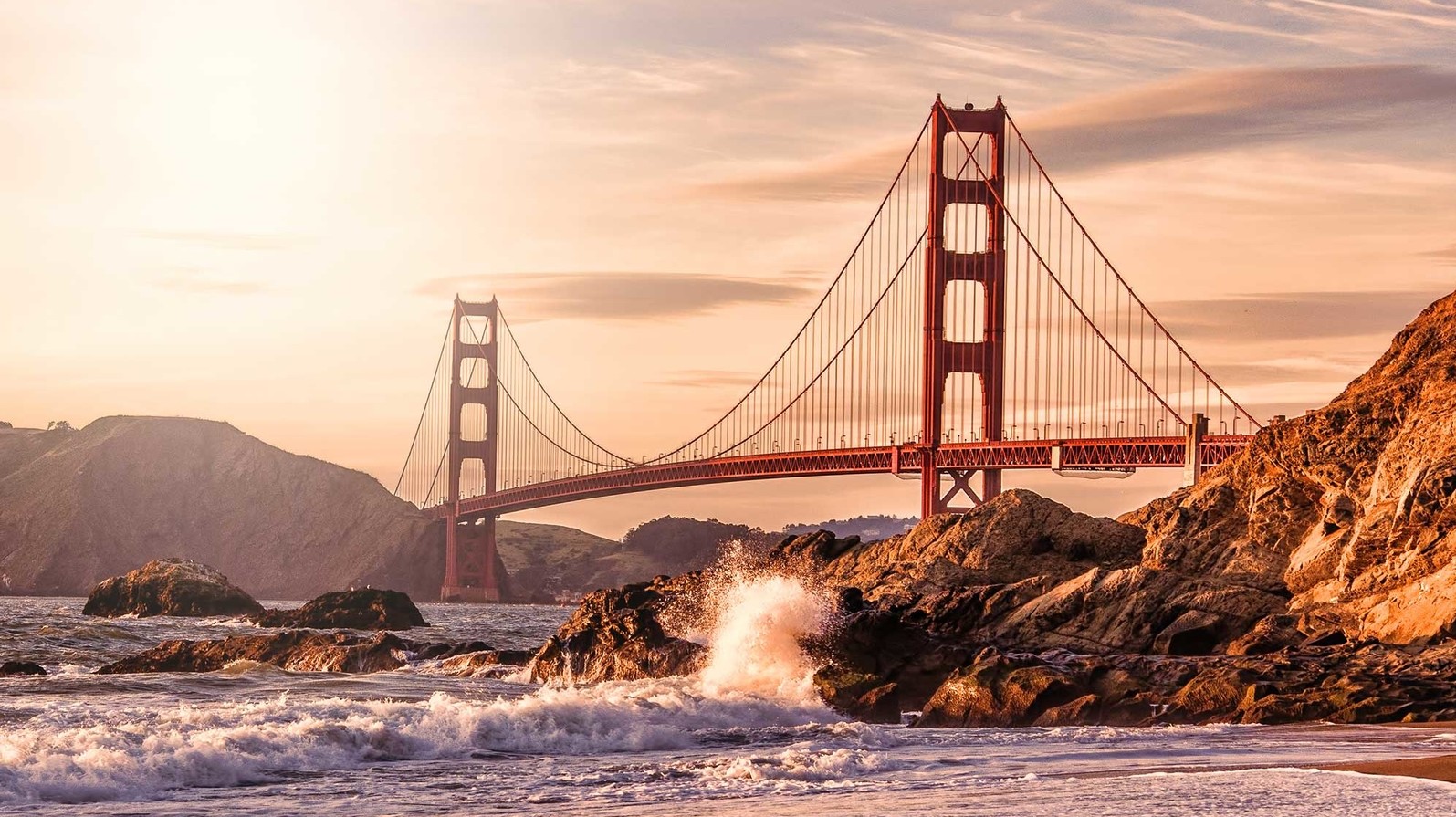
The Powell-Hyde cable car line and the F Market light rail line both go there. Hours are 11:00 to 18:00. Alcatraz Island This rocky island with an area of roughly 89,000 square meters is home to The Rock, a federal prison located in the island. Alcatraz Island was a filming location for the movie The Rock. Notorious inmates include Chicago gangster Al Capone, the skilled yet violent “Birdman” Robert Stroud, and the heartless “Machine Gun” Kelly. The punishment was physical and psychological; while vibrant San Francisco was visible from the bars of their cells, the prisoners could never reach it. Most of the prison's atmosphere is intact, while a bird sanctuary, a museum, and a bookstore have been established on the island. The bookstore sells books written by ex-prisoners, who remember being imprisoned there as an experience they will never forget. Despite Alcatraz's dark history, it remains a haven for various species of birds. “Devil’s Island” is associated with former prisoner Philip Grosser, who was imprisoned for refusing to serve in the military during World War I. He wrote a book about his life behind bars entitled Uncle Sam’s Devil’s Island, which documented the prison's brutality and darkness, thus helping to give the former Pelican Island its enduring name. Tips: There are three primary activities you can do on Alcatraz:
Alcatraz Day Tour: Visit the sights of the Island and the cellhouse.

Alcatraz Behind-the-Scenes Tour: Guided exploration of the island.
Alcatraz Night Tour: Recommended for visitors who prefer an unsettling experience.
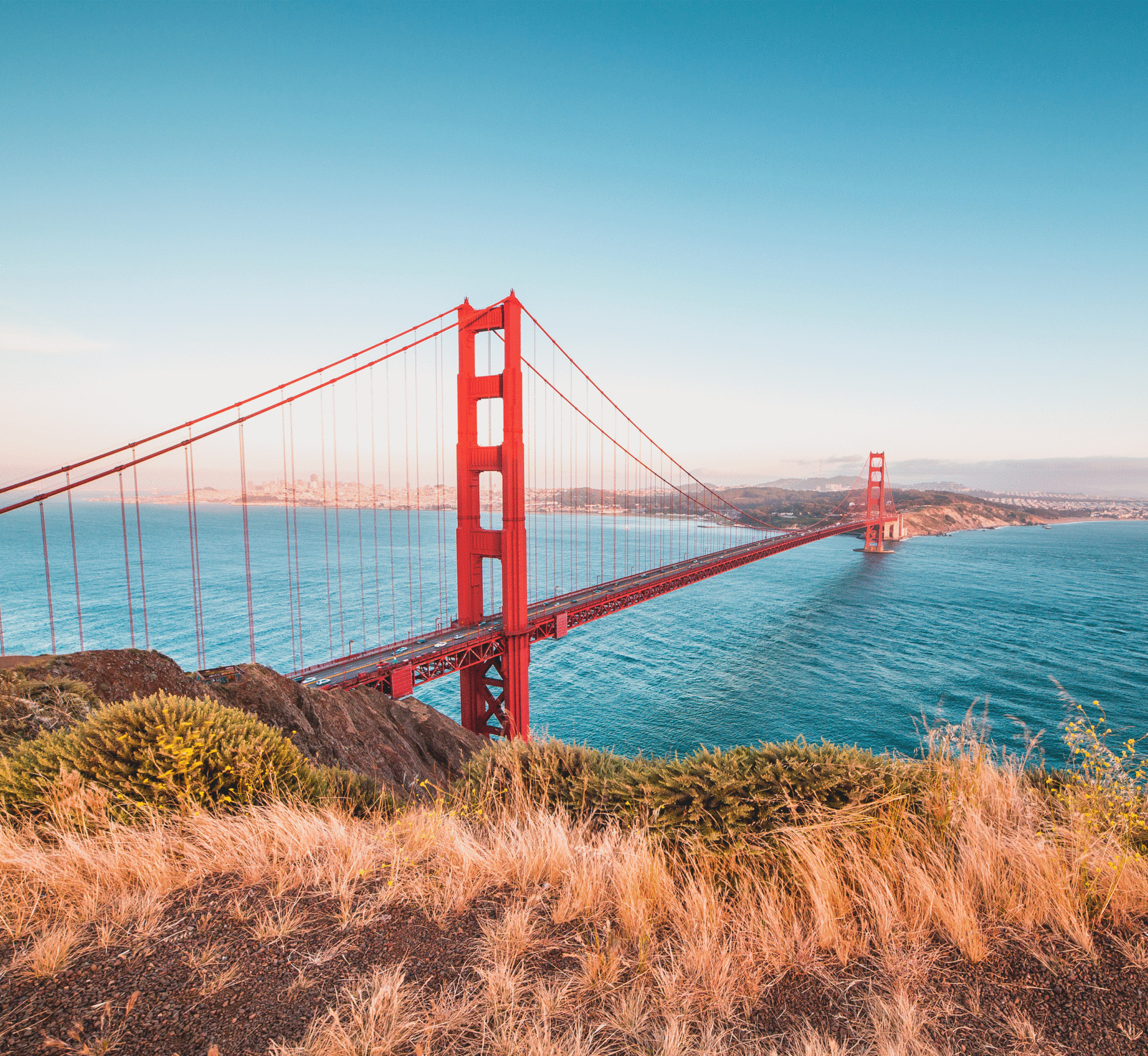
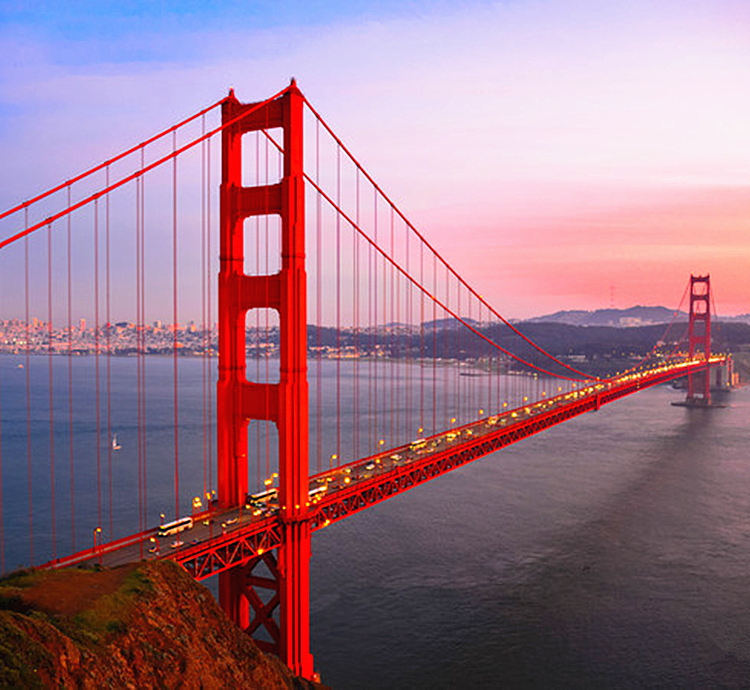
To access the island, take a boat to Alcatraz from Pier 33; parking is limited and expensive, so it is advisable to take a taxi or use public transport instead. The shortest routes take around 15 minutes, and there are departures every 30 minutes. Each day of the week has a different schedule, so you will need to check official sources for that information. TICKETS: Same-day tickets are not sold in person, so you'll have to buy a ticket online and bring the QR code with you to board. Reservations are usually required 1–2 weeks before your desired date. Tickets for the day become available 3 months before. SUGGESTED FARES: The prices for tickets are expected to be US$41 for adults, US$25 for kids ages 5–11, and discounted tickets for seniors over 62. Night tours are more expensive as they include more activities and are harder to book. The price of US$49 is not an official price. VISITOR GUIDE: There are audio guides available inside the prison, including Chinese audio guides. OTHER AREAS GOLDEN GATE BRIDGE The Golden Gate Bridge is a San Francisco landmark that opened in 1937. It crosses the Golden Gate Strait and connects Marin County to San Francisco. It is named for the Gold Rush as it was seen to be a gateway to the goldfields. Photo by Mandy. There are parking and photo opportunities at both ends of the bridge. The Fort Point view is one of the best places to view the bridge. To get there, you can take bus 28 or 29. Bus 76 goes there only on Sundays. PALACE OF FINE ARTS The Palace of Fine Arts was constructed for the 1915 exposition and was renovated in 1962 by German architect Bernard Maybeck. It has an imitated ancient Roman structure, which elicits feelings of grandeur and offers a movie-like experience.\n\nPhoto by Sai's Travel Notes - Taiwan\n\nPhoto by Sai's Travel Notes - Taiwan\n\nRecommended admission: Free \n\nDirections: Take bus 28.\n\nGolden Gate Park \n\nThe Golden Gate Park is among the biggest man-made parks across the globe. It covers the distance from the Ocean Beach on the Pacific side all the way to the center of San Francisco. This park completely subverts the expectations people have regarding a park as a small and tidy garden. Instead, it features many varied gardens, creating a large area with ponds, greenery, and pathways, as well as streams for visitors to meander. \n\nAmong its galleries, museums, and gardens, the California Academy of Sciences, founded in 1853, is noteworthy because it was the first of its kind in the country to integrate all branches of natural history, i.e., land, water, and air. Its museum, housed in a building with a very modern style, also includes an aquarium, the largest planetarium in the world, and a natural history museum, as well as a tropical rainforest. \n\nIt is a pinnacle destination. \n\nPhoto by Fei Who\n\nPhoto by Fei Who\n\nPhoto by Fei Who\n\nThe de Young Museum possesses a unique and diverse collection of art from all over the world, making it well worth the visit.\n\nPhoto by Asavafit 🍉\n\nPhoto by Asavafit 🍉\n\nThe park incorporates a children's playground and a Japanese Tea Garden, so there is always another great stop coming up.\n\nPhoto by Xunzi\n\nPhoto by Xunzi\n\nPhoto by Xunzi\n\nRecommended path: Botanical Garden — Japanese Tea Garden — de Young Museum — California Academy of Sciences — Conservatory of Flowers\n\nHints:\n\nFood services are available in Golden Gate Park. The popular Cliff House is located above Ocean Beach. Suggested costs for The Botanical Garden, Japanese Tea Garden, and Conservatory of Flowers include a combined ticket at $25 for adults. There is no charge for entry to the Botanical Gardens before 9 a.m. California Academy of Sciences charges $40.95 for entry. The park is open Monday through Friday from 8 a.m. to 5 p.m. California Academy of Sciences opens Monday through Saturday from 9:30 a.m. to 5 p.m., and Sunday from 11 a.m. to 5 p.m. To get there, take the 44 bus and get off in front of the de Young Museum. The Ferry Building is another important landmark in San Francisco. It is much more connected to the everyday flow of the city than is Fisherman’s Wharf. Its Spanish-inspired clock tower adds to the building’s elegance. It has a high arched glass roof, and the interior is filled with natural light. The building feels very open and bright. The building also features some of the best food options in the city, and has become one of the top food destinations in San Francisco. San Francisco may seem quiet and restrained after hours when the nightclubs and dance floors of Las Vegas and New York are open. It can really quiet down after hours. Travelers frequent Twin Peaks for an enchanting view of the city, rather than for an obnoxious night on the town. Photo by Yixie Jun Photo by Yixie Jun Photo by Yixie Jun Photo by Yixie Jun Twin Peaks has a height of 270 meters, and is made up of two hills that were previously dubbed by Spanish colonizers as "the breasts of the Indian maiden." The two hills offer 360 degree views of the city, and are still one of the last remaining natural hills of the city. The trek is quite challenging, so plan to wear a good coat for the icy winds, as well as fall clothing. Getting there: Take bus 37. Bernal Heights Bernal Heights is a well known view point of the city, where a 5 minute walk from it’s base to the summit is all it takes. Feel free to lounge on the grass to fully appreciate the view, as there is also a famous swing located nearby. Photo by Yixie Jun Photo by Yixie Jun Tips:1**: Get there early in the morning to be the first to arrive, and to avoid the large crowd and the swing line. It is also quite beautiful at dusk. **2: To make your photos look nice, consider laying out a picnic blanket while facing the city, and set out some food and drinks to complete the look. 3**: Wearing bright clothing is an excellent choice for standing out against the city backdrop when using the swing **4: Be sure to take a lot of photos from multiple angles to ensure you capture everything Haight-Ashbury If you wish to capture a piece of the 1960's hippie culture, visit Haight-Ashbury. “If you’re going to San Francisco, be sure to wear some flowers in your hair. ” is a lyric from the song San Francisco, by Scott McKenzie. It drew countless idealistic young Americans, flowers in their hair, to the city’s hippie heartland. Currently, it’s still referred to as the hippie district and the street of counterculture in San Francisco.`

Photo by Zoe Mengmeng
Photo by Zoe Mengmeng
Grey-haired as these rebellious hippies may be, their spiritual home lives on. Graffiti, posters, and rock music all keep the spirit of the neighbourhood alive and in style. There are many things to do in the area such as exploring independent shops and vintage stores, admiring the street art, and grabbing a drink or bite at one of the many bar and restaurant. The store displays are often artistic enough to warrant a picture.
Photo by Zoe Mengmeng
Photo by Zoe Mengmeng
Photo by Zoe MengmengSuggested stores: Goodwill, Buffalo Exchange, Westeland, Indigo Vintage Co-op.