U.S. East Coast: The East's focus is more on history, politics, and culture but also makes room for attractions like Niagara Falls and the Great Smoky Mountains. If your interests lie in American History, your travels would not be complete without a stop in one of the older cities of the nation. If your winter holidays are in the south, you can include a stop in Florida as the southern state offers a warm climate while providing major theme parks in Orlando and a tropical layout in Miami. An East Coast trip can include Disney and Universal's, the wildlife of the everglades, and finish in the more relaxed Key West creating an even mix of cities, nature, and entertainment.
II. The American West: What to Do
1) Natural Scenery: Highway 1

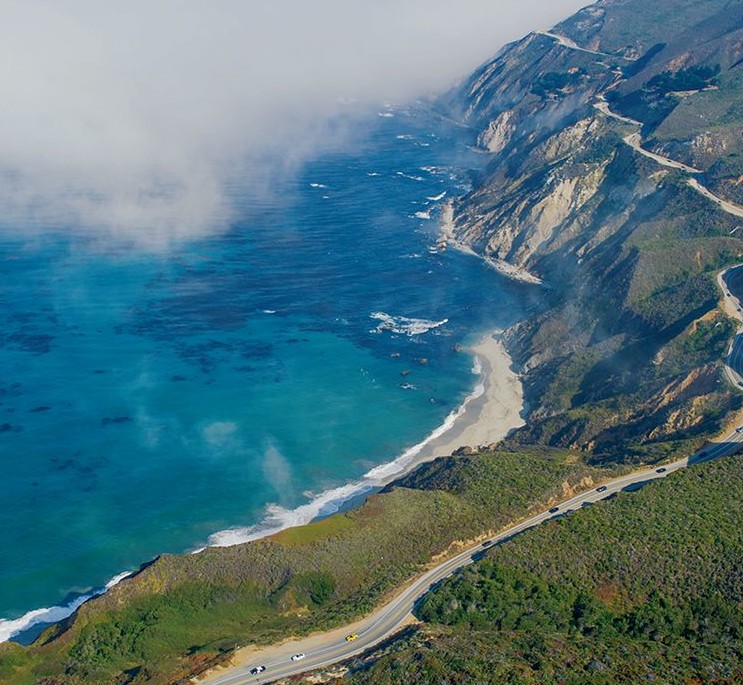
Highway 1 is the final destination for many west coast road trips. Rolled up windows quickly drop when drivers hit warm, sunny, ocean-side open roads with spectacular views of shear rocky cliffs.
Approximately 40 minutes to the south of San Francisco lies Stanford University. About 1.5 hours southwest of there lies Monterey, one of the more popular destinations along Highway 1. At this location you can find the 17-Mile Drive, Pebble Beach golf course, an aquarium, and Cannery Row. Carmel is only about 20 minutes away making it easy to pair Monterey with Carmel Mission and Carmel Plaza.

Further south, the route passes the picturesque Big Sur and the Danish-style town of Solvang before coming to Santa Barbara. Santa Barbara has a charming Spanish influence. Highlights include Stearns Wharf, the waterfront parks, and Old Mission Santa Barbara. It is also a place to enjoy fresh seafood and buy souvenirs with a Latin flair. Highway 1 Self Drive Tips
Starting from San Francisco and heading south, you will be driving on the right (ocean side) which makes it easier to pull over at the view points.
When using your navigation app, be sure to add stops along the way. The app may lead you to take U.S Route 101 which will cause you to miss the coastal views.

As you drive along the California coastline, keep in mind that around sunrise and sunset, the glare from the sun can be extreme. It is important to wear sunglasses and drive safely. Passengers will need to help monitor the navigation while wearing polarized sunglasses as some navigation screens may be hard to see.

There are five main areas to see in Yellowstone National Park:

1. The southwestern geyser zone which has a wide variety of geysers, hot springs, steam vents, mud pots, and fumaroles.
2. The northwestern area surrounding the Norris Geyser Basin and the Mammoth Hot Springs.
3. The central canyon region with the Grand Canyon of the Yellowstone along with its waterfalls.
4. The northeast Roosevelt section which has Old West style landscapes.
5. The southeast region with Yellowstone Lake, including West Thumb.
Transportation Recommendations:
1. Yellowstone has five entrances: East, West, South, North, and Northeast. So, the shortest route from Salt Lake City to the park is via the West Entrance at West Yellowstone: Salt Lake City – Idaho Falls – West Yellowstone. The segment of the route from Salt Lake City to Idaho Falls is on Interstate 15 and takes approximately 4 hours. The remaining portion of the route is not an interstate but is of good quality with nice scenery.
2. Grand Teton National Park is located near the South Entrance of Yellowstone. When you drive north from Signal Mountain via John D. Rockefeller, Jr. Memorial Parkway, you can enter Yellowstone from the South Entrance. The road passes Moose Falls where moose can occasionally be seen. Follow the Lewis River past Lewis Lake and Grant Village to the figure-eight road system at the center of the park.
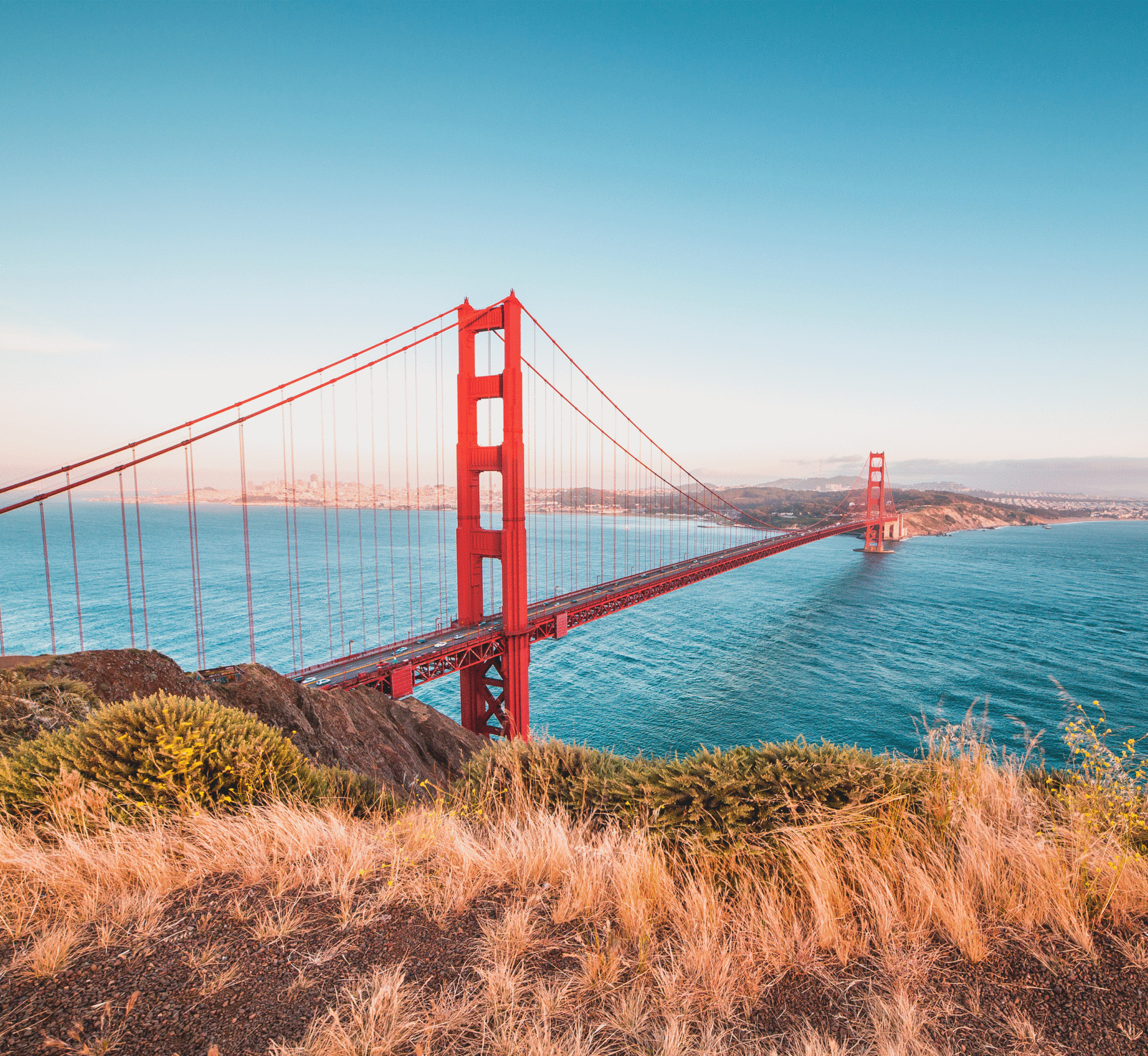
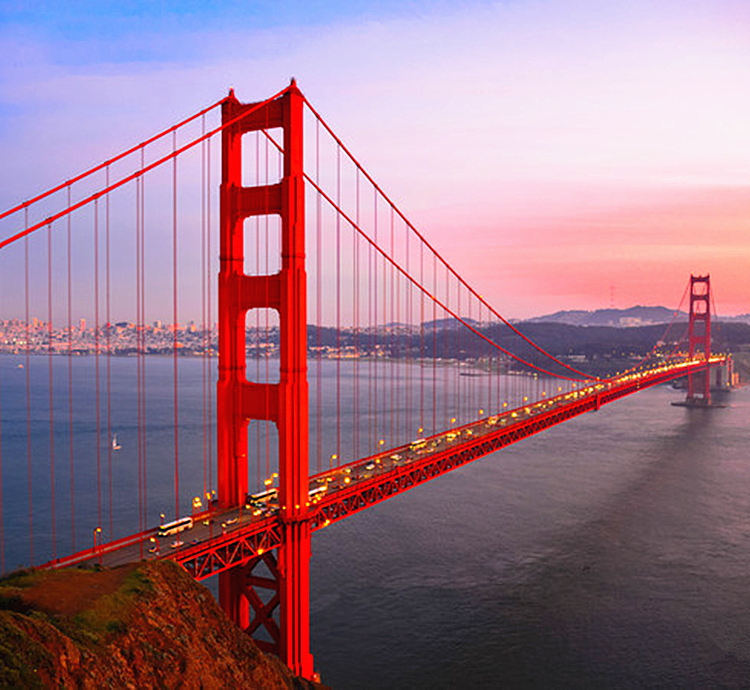
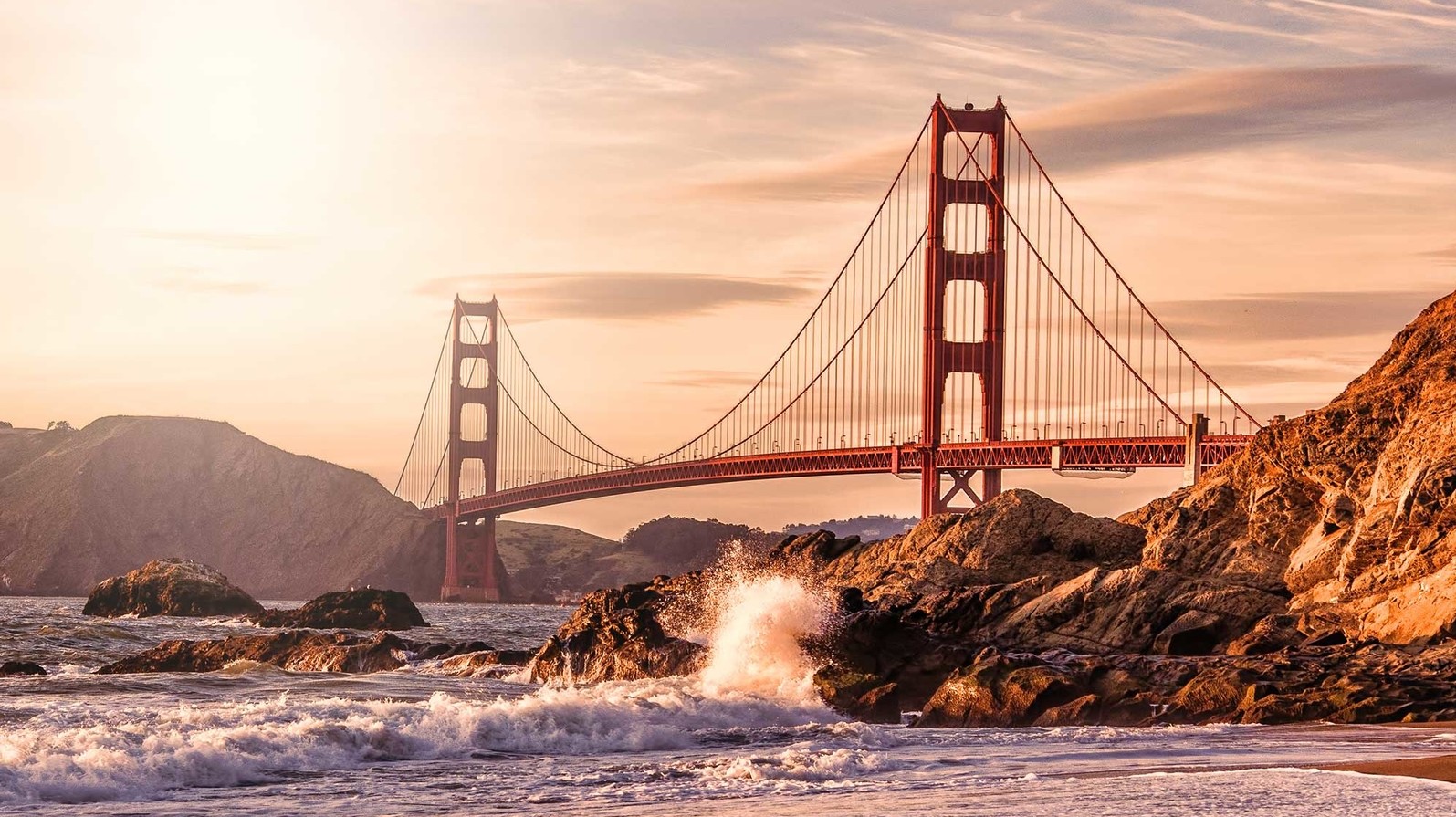
3. The main roads in Yellowstone form a figure eight that is approximately 150 miles long. Most major attractions are located near this route, but the park is large and encourages visitors to stop often to view and take photographs. There is a 2 to 3 day waiting period. City Experience Packages Los Angeles Los Angeles is one of America’s largest cities along with New York and is world-renowned for Hollywood, making it a defining West Coast city. In LA, you can find a unique blend of entertainment, beach culture and glamour such as the Los Angeles Lakers' home arena, Santa Monica Beach, Hollywood Walk of Fame, Disneyland and Universal Studios, as well as Beverly Hills. San Francisco San Francisco is a renowned urban destination, particularly for visitors to California. It is home to the famous red Golden Gate Bridge, the scenic but disorientingly winding Lombard Street, and the acclaimed seafood at Fisherman’s Wharf. The nearby Stanford University and the University of California, Berkeley, along with Silicon Valley, make this a convenient stop for tech and academia travelers. Las Vegas Las Vegas is known as the brightest and biggest destination in the Nevada desert, with many world-class and luxurious casinos lining the main street. The Venetian, MGM, Trump, Bellagio, and Paris Las Vegas are some of the famous hotels that combine lodging with casino entertainment. Besides gambling, Vegas also offers extravagant shopping, shows, and dining. What To Do In The American East City Experiences New York New York is on the list of the world’s greatest cities, with so many features it is difficult to comprehensively describe all the offerings. The famous line from the TV show Beijing People in New York states, “If you love somebody, take them to New York.” “If you truly hate someone, take them to New York City.” The Statue of Liberty, Empire State Building, Broadway, Times Square, Yankees Stadium, Wall Street, Brooklyn Bridge, and The Metropolitan Museum of Art and of course, Central Park and Fifth Avenue, are only the beginning. Washington, D.C. As the U.S. capital, Washington, D.C. is a federal district and is not part of any state. History buffs can take pleasure in visiting the White House, the U.S. Capitol, Lincoln Memorial, the World War II Memorial, and numerous national museums. The National Museum of American History has a super cool section dedicated to the history of aviation and warfare which is perfect for those fascinated by air travel and warfare. Boston Just above New York City is Boston, one of the oldest cities in America and rich in history. Home to Harvard University and the Massachusetts Institute of Technology, the Freedom Trail runs through the city and marks where significant things happened in U.S. history. Quincy Market is a great place to get some Boston lobster. If you like history, food or academia, this is a place to visit. IV. What’s the best way to get around the U.S.?

The best way to travel the U.S. is by car, and self-driving is often the most comfortable and practical way to travel. It is wrong to think independent travel, like what you might do in Taiwan, Hong Kong, or Southeast Asia using only public transport, would work here. Outside of the major cities, public transport is not designed for tourists and does not run anywhere near the sightseeing areas. For independent journeys, renting a car is usually the best option. Reasons for this include: \n 1. Driving in the US is easy. Like China, the US drives on the right side of the road. The highways are spacious, well marked, and simple to navigate. 2. Most interstate roads in the western US are free. (tip: If you're renting a car in Florida, check out the Florida SunPass to help pay for tolls.) \n To drive in the US, you must have a valid driver's license. Most states recognize Chinese driver's licenses, but it differs by state. California, Arizona, and Nevada accept more recent Chinese licenses. Those licenses have both Chinese and English characters. Older licenses may need to be translated to be accepted. Make sure to check all of this before your trip. \n If you plan on driving, you'll need a few things. Every driver must have their physical US license (held for over a year) and any additional documents as described to drive in the US. The main driver must have an international credit card and all drivers must carry their passport. \n There are a few things you will need to keep in mind while driving: 1. STOP signs: A lot of intersections do not have traffic lights but instead have red STOP signs. When 4 cars arrive at the same time, the first car to fully stop and arrive has priority. In most cases, the car on the right goes first. 2. Speed limits: You must adhere to the signs. Do not assume that surrounding traffic going faster gives you permission to break the law. Keep to a safe and legal speed and remember that police may be monitoring this area.
Right turns on red: You can only do this if you stop completely and check that it is clear to do so. If there is a sign that says NO RIGHT TURN ON RED then you must not turn even if the road looks empty.

Street parking: If the car is still occupied, this may not be treated as parking in some cases, which is handy if you just want to make a quick stop at a store. You must not park on a red curb. If the curb is not colored, a sign is not present and there is no markings on the pavement then you may be able to do a short stop, but do not obstruct driveways or curb ramps.

Parking meters: These can be a good option for short stays as they do accept MasterCard and Visa. Simply choose the desired time, pay by credit card and the meter will begin counting down.
Parking garages: These are the best option for longer stays or places where street parking is not available. Some have attendants and others are self service.


Highway 1 and Yellowstone National Park


3. Classic Eastern Cities and Niagara Falls
DAY 1: HOME COUNTRY – WASHINGTON D.C.
DAY 2: WASHINGTON D.C.: Visit the U.S. Capitol, the National Air and Space Museum, the Washington Monument, and the Lincoln Memorial
DAY 3: WASHINGTON D.C.: The White House and Georgetown
DAY 4: WASHINGTON D.C. – BUFFALO: Fly to Buffalo to set up for Niagara Falls
DAY 5: BUFFALO – BOSTON: Take the Maid of the Mist to see Niagara Falls and then fly to Boston
DAY 6: BOSTON: Harvard, MIT, The Freedom Trail, and food at Quincy Market
DAY 7: BOSTON – NEW YORK: Bus to New York, Times Square, and Fifth Avenue
DAY 8: NEW YORK: The Statue of Liberty, Wall Street, the World Trade Center, and the Brooklyn Bridge
DAY 9: NEW YORK: Central Park, the Met, and the Museum of Natural History

DAY 10: NEW YORK: Woodbury Common Premium Outlet shopping
DAY 11: NEW YORK: Depart New York
DAY 12: Home again
Planning concept: This itinerary is designed to showcase the East Coast's most iconic cities and natural attractions. Niagara Falls is the most significant international waterfall, and along the way, we pass some of the most famous universities and museums in the U.S. If you would rather not include Niagara Falls due to travel time and connections, then focus on the three cities.
Crossing The East and West Coast